
📌 In This Deep Dive
The true story behind Netflix’s Surviving Hurricane Otis originates from the real-life accounts of Acapulco sailors Marlon Valdez and Jonathan Chico, who survived the 2023 Category 5 storm while performing the hazardous practice of velar to guard luxury yachts. Separating fact from movie fiction reveals how the filmmakers adapted their survival narrative into a commentary on Mexican social inequality while adding fictional family ties and a fabricated extortion plot. Exploring the actual disaster highlights what really happened on the water and why screenwriters introduced those dramatic changes.
Natural disasters, true stories, and everyday heroes: Netflix’s new Mexican production Surviving Hurricane Otis has all the elements to grab widespread interest. The film frames an adventure within a real-world event, the hurricane that devastated Acapulco in 2023, weaving it together with themes of social inequality, family dynamics, and the many things people are forced to do because of widespread poverty.
The leads of this drama are Wirpul and Candi, and since the movie is explicitly based on a true story, it’s only natural to wonder what’s real and what’s fiction in the events on screen. Did the yacht Wirpul was watching over actually sink, leaving the two of them surviving in the water until the cyclone passed? And how much truth is there to what we see at the end, with Candi’s fake disappearance and the payout from the yacht owner to hush the matter up?
As always, separating real-life facts from the elements added by the production helps us understand the true message behind the film.
The True Story Behind Surviving Hurricane Otis: The Hurricane and Guarding the Yachts
Hurricane Otis was 100% real and really devastated the area around Acapulco, causing billions of dollars in damage and claiming the lives of dozens of locals. It was the most powerful hurricane ever recorded up to that point on the Pacific coast of North and Central America, and the first Category 5 hurricane ever to make landfall there. And things actually played out pretty much as the Netflix movie shows us: initially, Hurricane Otis was projected as a simple tropical storm that wasn’t even supposed to reach the coast, only to rapidly transform into the biggest disaster that region had ever seen.

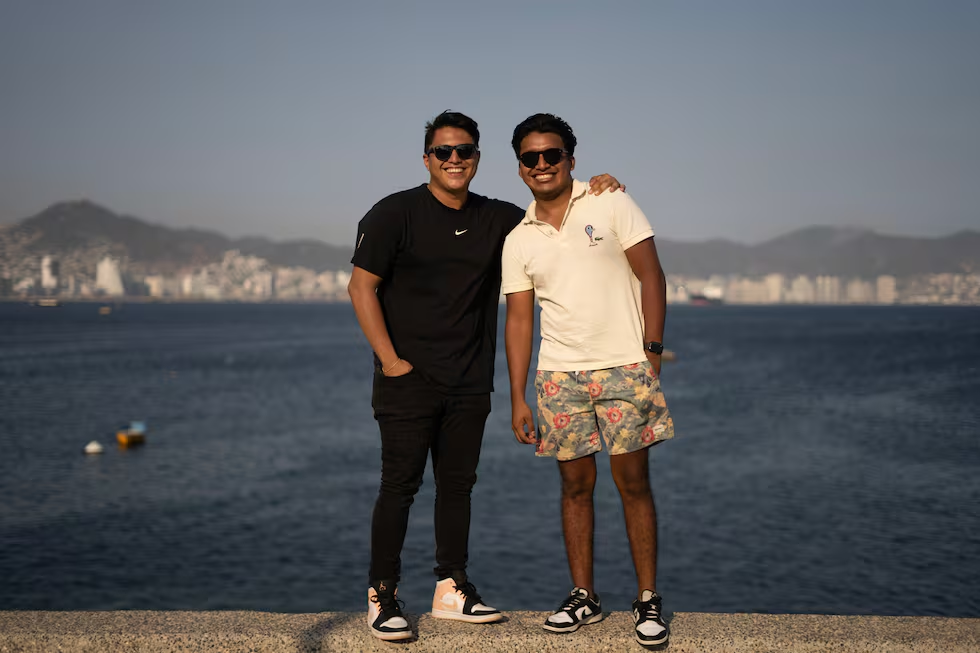
The storm left 52 dead, 32 missing, and caused between $12 billion and $16 billion in total damages. Wirpul and Candi’s story comes from the first-hand account told by Marlon Valdez and Jonathan Chico to El País a few months after the disaster. The article recounting how the two survived is still online on the Mexican site of El País, and it reflects what we see in Surviving Hurricane Otis fairly closely: the two sailors were paid to stand guard over one of the many luxury yachts owned by the area’s wealthy residents, trying to protect them from the storm. When the hurricane hit, the yacht sank, making all their efforts in vain. Marlon and Jonathan ended up in the water and managed to survive right in the eye of the storm, clinging to floating debris and eventually making it back to shore, while many other sailors lost their lives.
It’s a practice bitterly known as velar, which can be useful in lower-intensity storms, but reveals its full absurdity when faced with a hurricane like Otis. The wealthy owners of the luxury boats docked along the coast pay local sailors to “stand guard” (which is what the verb velar means in Spanish) during storms. That way, for a relatively low fee, those sailors can limit the damage caused by the storm by constantly working the lines so they don’t snap, moving the boat when the tension gets too high, and making sure the yacht doesn’t take on water. Without those constant interventions, the boats are far more likely to drift off and sink. So for wealthy owners, it’s a small price to pay to ensure their property doesn’t suffer major damage during a medium-strength storm.
The issue that came to light during Hurricane Otis, though, was how severely the storm’s power had been underestimated. All the owners acted the way they always did for minor storms, and many sailors headed down to the boats at the docks before the hurricane hit. Soon enough, though, it became clear that the storm was going to be so intense that no sailor could possibly do anything about it. Being out on the water in the middle of a hurricane turned out to be completely pointless, and as a result, many poor local sailors lost their lives, paid by wealthy owners for the impossible job of saving their boats.
So the movie Surviving Hurricane Otis isn’t just an account of the destruction left behind by the 2023 hurricane, but also a portrait of the hard realities in Mexico, where deep social inequality creates profound injustice. It’s a theme that Mexican cinema has long explored, something we’ve seen on screen many times before, and here it serves to add real depth to a natural disaster story. As the director of Surviving Hurricane Otis pointed out, the villain of the film isn’t the hurricane itself, which is just a natural phenomenon, but rather the system that created enough poverty to force local residents to risk their lives for a few pesos.
The fictionalized elements and the movie’s ending
With that in mind, Surviving Hurricane Otis introduced a few fictionalized elements around Marlon and Jonathan’s true story. The two sailors actually participated in making the movie, working closely with the director and even making a cameo inside the narrative (their voices are the ones responding to the distress calls sent out by Wirpul during the storm). In real life, though, there are no family ties between them: using two half-brothers as the leads was a way for the film to shine a light on specific dynamics that genuinely happen in Mexico, again stemming from widespread poverty. In the movie, Wirpul and Candi share a father but have different mothers, and his death brings out the friction of having to share a property while belonging to fundamentally different family units.

The events we see in the ending of Surviving Hurricane Otis are also purely part of the cinematic narrative: Wirpul never faked Candi’s death to wring a huge payout out of the yacht owners. But it’s a plausible component that easily fits the economic realities local sailors face: exploited, underpaid, and forced into risky practices for meager pay. And if something terrible happens, those at the top of the economic ladder will naturally pay off whoever necessary to sweep the matter under the rug and clear themselves of any responsibility.
In the true story, Marlon and Jonathan were fortunate enough to survive Hurricane Otis while many others lost their lives. Neither ever returned to working at sea, choosing completely different paths instead (Marlon works in a hotel and Jonathan became a programmer), and they obviously never tried to scam the owners who had paid them to guard the yacht. When they told their story to El País, the journalist made a comment that turned out to be prophetic: “Just wait until Netflix hears about this story, you’ll see.” Three years later, their story did indeed become a movie.
Frequently Asked Questions
Yes. The film is based on the real-life account of Marlon Valdez and Jonathan Chico, two local sailors who survived the catastrophic Category 5 Hurricane Otis in Acapulco in October 2023 while standing guard aboard a luxury yacht.
They are fictionalized versions of real-life survivors Marlon Valdez and Jonathan Chico. While their names, personalities, and family backgrounds were altered for the screen, their core experience of surviving the storm out at sea is directly drawn from the real event.
No. Marlon and Jonathan are close friends and colleagues, but they share no family ties. The screenwriters made the leads half-brothers to introduce interpersonal family tension and highlight how local poverty complicates domestic life in Mexico.
No. The movie’s ending subplot—where Wirpul fakes Candi’s death to squeeze a cash settlement out of the wealthy boat owner—is complete screenwriting fiction. In reality, no extortion scheme or fake death took place; both men simply fought to survive the storm and reached shore safely.
Velar (literally “to keep watch” or “stand guard” in Spanish) refers to the unwritten maritime practice of paying underpaid local sailors to stay aboard luxury yachts during storms. The sailors manage dock lines, adjust fenders, and run bilge pumps to protect the owner’s property—a routine that works during minor storms, but turned lethal when Hurricane Otis rapidly intensified into a Category 5 cyclone.
After surviving the night by clinging to floating debris in the harbor, both men chose to walk away from maritime work permanently. Marlon relocated to Playa del Carmen to work in hotel hospitality, while Jonathan moved to Mexico City and retrained as a software developer.
