Discover the emotional meaning behind the Radiohead song ‘I Can’t’ in Remarkably Bright Creatures: explore why Cameron chooses this 1993 track on Netflix.
There could have been various poignant moments in Remarkably Bright Creatures, the Netflix adaptation of Shelby Van Pelt’s bestseller, and certainly, the film did not fail to draw a tear from our eyes: seeing Sally Field as the elderly Tova, who has lost both her son and her husband, melts the heart, and witnessing the way she and Cameron draw closer offers us a tender interlude carved out of a world that is usually frantic and loud.
Yet, the most emotionally intense moment of the film is the one you least expect: Cameron’s performance at the bar, as he interprets an acoustic version of I Can’t, which he himself describes in an earlier scene as the most underrated song from Radiohead’s first album. In hindsight, knowing how the story ends, that song takes on an even more intense meaning, precisely because of the hidden bond it creates with Cameron’s father, who until that point remained unknown.
Why I Can’t, specifically? The choice of this particular song actually holds a very distinct significance for Cameron’s character in Remarkably Bright Creatures, and uncovering its nuances allows us to grasp one of the film’s hidden secrets.
I Can’t: Cameron’s introversion and the bond with his father
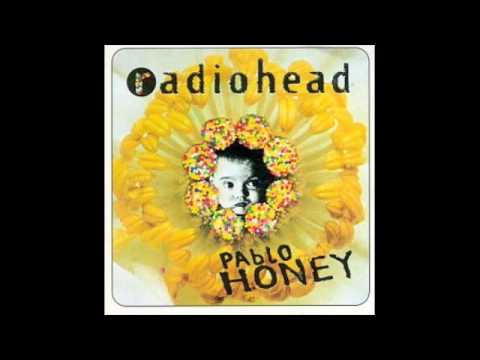
The first moment we see Cameron come into contact with I Can’t is while he is driving Tova’s car. Tova pulls from the dashboard some old cassettes that belonged to her son Erik, and among them is Radiohead’s first album, Pablo Honey. When she inserts it into the player and hits play, the notes seem to come from a different musical era, and the song’s introspective intensity immediately connects with Cameron and with us.

As we discover at the end of the story, Cameron is actually the son of Erik, the boy Tova lost years ago. Thus, that cassette, in its analog format belonging to an era from two generations ago, represents a surprise bond with the father Cameron never knew: having grown up with his mother’s guitar and become a musician himself, he had music in his blood also thanks to his father Erik’s natural passion for the great rock bands.
His appreciation for Radiohead, therefore, reflects the character that Cameron inherited from Erik, without knowing it. And while listening to I Can’t in Tova’s car, Cameron does not yet realize he is deepening his bond with the father he never met, through the introspective notes of a track that reflects the character similarities between the two.
The meaning of I Can’t: a song for those who cannot find their place in the world
As with many other songs from Radiohead’s debut album, I Can’t expresses an existential condition that the band felt very powerfully in those years: that of young people not yet fully integrated into society, who had not yet found their own dimension. In Pablo Honey, Thom Yorke plays the role of a singer disconnected from a world that he does not understand and by which he does not feel understood.
For this reason, the meaning of I Can’t fits Cameron’s character perfectly: he too is a young singer, and his life is marked by lost roots—a deceased mother and an unknown father—and the sensation of having no place of belonging in the world, as he lacks even a home and sleeps in the van inherited from his mother. We can clearly see why I Can’t resonated instantly with his emotions, acting as the introverted lament of an artist in need of someone to anchor him in a stable way.
Please forget the words that I just blurted out
It wasn’t me, it was my strange and creeping doubt
It keeps rattling my cage and there’s nothing in this world will keep it downEven though I might, even though I try, I can’t
Even though I might, even though I try, I can’t
Already in these verses, this two-way lack of communication between the protagonist and the world in which he lives is clear: nothing out there can ever reassure him, and nowhere will his doubts and insecurities ever find a home. It feels almost like reliving Cameron’s story in these lyrics: a boy without parents, without a home, and without strong ties that might push him to set down roots in a particular place.
Like Thom Yorke himself, Cameron also begins singing I Can’t with a hushed voice, amidst the noise of the bar. Yet, gradually, the intensity of the music carves out a space in that context, and ends up humbly winning over everyone. By the end of that performance, the bar is completely captured by the protagonist’s voice, who in that moment—at least for a heartbeat—can feel that the world has a place even for his fragility.
So many things that keep, that keep me underground
So many words that I, that I can never find
If you give up on me now, I’ll be gutted like I’ve never been before
Cameron’s homecoming and the ending of Remarkably Bright Creatures
In the light of what we discover at the end of Remarkably Bright Creatures, we realize that the acoustic performance of I Can’t was not merely a musical interlude, but a profound emotional turning point in the film: in that bar, Cameron is not only singing Radiohead; he is unconsciously giving voice to the feelings of Erik, the father he never met, right before the glistening eyes of Tova—the grandmother he never knew he had.
It is within this invisible web of connections that the magic of the film, and the story that inspires it, resides: music acting as a generational bridge, a slender thread connecting Tova’s tragic past to Cameron’s uncertain future. And in the end, the fear expressed in the lyrics of being “gutted like he’s never been before” proves to be an unfounded one: Cameron receives his signal of reconciliation with the world and finds both a home and a family in his rediscovered grandmother, Tova, who—to close the circle—likewise felt a desperate need for the family dimension she had lost.
And so, through a Radiohead song from more than twenty years ago, Remarkably Bright Creatures reminds us that it is never too late to be found.
