
The Citadel chip can become a reality: explore the true story of memory erasure and formation through propranolol, optogenetics and BCIs and how close 2026 science is to the show on Amazon Prime.
Citadel, the Amazon Prime Video series arriving at its second season in 2026, possesses a particularity that renders it profoundly fascinating: its unique manner of weaving a narrative of spies and secret services anchored in reality with certain elements closer to science fiction, such as the capillary control satellites we witness in Season 2. They are narrative devices that make the story more captivating and raise questions about how distant reality truly is from what we behold.
As we have already done with War Machine and the reality of killer robots, inquiring into how much true story lies behind the plot of Citadel can lead us to discover things we did not know—and perhaps, things we did not wish to know. For knowing that today’s reality is not so far removed from the troubling practices we witness on screen can be a bolt from the blue: potentially destructive, yet necessary.
In Citadel, we witness the application of this fearsome chip, capable of performing the so-called “Memory backstop”: the immediate erasure of every memory, a sort of reset that instantly annuls the subject’s personality. The matter evolves in Season 2 even into a function of “activation/overwriting” that transforms individuals into something entirely different.
Pure science fiction, no? Well, the scientific reality of 2026 is capable of performing feats already remarkably close to those we see, through practices such as propranolol, optogenetics and brain–computer interfaces. And at this point, it becomes necessary to know everything about how closely science fiction approaches the world of today.
Erasing memories with Propranolol
Surprisingly, there exists a long series of recent scientific inquiries into the alteration of long-term memories. Such studies are founded upon the realization that memories are not akin to isolated files saved within the cells of our brain, but represent fragments that, in order to endure, necessitate a specific process to shift them from the strata of temporary memory to that of the permanent. This process is called “consolidation” and unfolds through deeply physical components of our body: adrenaline, neurotransmitters, and the hormones that stimulate the amygdala.
As explained by this article in Scientific American with its striking title, “Erasing Memories,” it is possible to intervene in this process through Propranolol, a beta-blocker that prevents adrenaline from being absorbed. Consequently, employing Propranolol with precision during the process of memory consolidation would effectively prevent them from transforming into permanent recollections.
The Citadel chip proceeds on command to eliminate memories already consolidated within the subject’s brain, correct? Well, recent studies demonstrate that even permanent memories require regular “reconsolidation” to remain as such. Therefore, the use of Propranolol can impede the action of reconsolidation, allowing us to “forget” things more swiftly, or to rewrite memories by stripping them of their emotional component—an application of this substance already utilized to treat the traumas born of tragic past experiences.
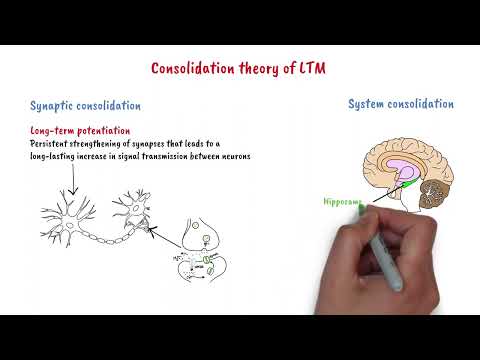
Forgetting rapidly, eliminating temporary memories, and rewriting the emotions linked to them… in short, what we witness in Citadel is already occurring, though not within the span of a few seconds as in the series.
Optogenetics: Altering the functioning of the brain with light
Through optogenetics, the landscape draws even closer to that form of “memory writing” we witness in the second season of Citadel. Optogenetics is a process of genetic modification of our brain that renders neurons sensitive to light: if this happens, our cerebral activity can effectively be inhibited or excited in a localized manner through luminous stimuli. And this is also possible for memories, if the luminous stimulation is applied to the engrams—the physical traces that our memories leave within the brain.

It sounds like science fiction, but the (troubling?) truth is that “memory transplant” experiments similar to the film Inception have already been carried out with success on mice. This celebrated 2013 experiment did exactly that: using optogenetics to stimulate cerebral engrams, it forced the mice to develop a traumatic memory.
Mice with normal memories linked to reassuring environments were moved to artificially dangerous settings, where they were subjected to small shocks that created a traumatic response. Through optogenetics, the brain of the mice was forced to reactivate the memory of the safe environment at the very moment the traumatic shock response took shape.
In this way, that “reconsolidation” process we mentioned earlier was forced: the memory is reopened and “saved” again, this time with the addition of the traumatic component. The result? If those mice were returned to the healthy environment, they immediately developed the same traumatic response, even though nothing traumatic existed in their experience of that place. It was optogenetics that “transplanted” a false memory into that environment, just as in Christopher Nolan’s film.
And suddenly, the image of the “activated individual” that we see in the second season of Citadel becomes far more plausible.
Brain–computer interfaces: the chips that rewrite the functioning of our brain
Until now, we have seen the use of substances or luminous stimuli to act upon the brain. If, however, we want to seriously address the concept of a chip grafted beneath the skin, well, this too is a reality: they are called BCIs, brain–computer interfaces, and have been used in the medical field for several years.
The so-called “invasive BCIs” are electrodes that are implanted directly into our gray matter, in direct communication with computers. Initially, they were born in a “read-only” mode: cerebral connections were read by the computer to give an alternative expression to their message. In this way, it was possible to translate the thoughts of the brain into physical actions, such as moving an artificial hand by imagining doing so, in individuals who had lost their arms: the computer reads the thoughts through the neural interface and translates them into movement.

From the read-only mode, neural interfaces then evolved into a bidirectional mode, capable of “writing” new functionalities into the brain. The medical applications of such technology are varied: it has been possible to restore sight to blind individuals or movement to subjects suffering from permanent paralysis.
Rewriting memories? This, too, is possible: DARPA’s controversial RAM (Restoring Active Memory) program has done exactly this, taking individuals who had removed traumatic memories and using these neurotechnologies to recover those recollections, or even reactivating a true “replay” that can have practical effects in training pathways.
All of this is done for real with the use of a computer remotely connected to a chip grafted into the human brain. From this perspective, what we witness in Citadel truly exists, and the writing potential of such chips is already proven. The final piece remains forcing instant training upon the subject, just as in the series where agents were transformed into assassins at the mere click of a button on a laptop.
The Citadel chip and the ethical controversies of “brain hacking”: a true story
Arriving so close to what we behold in the second season of Citadel, we enter into intimate contact with the ethical dilemmas linked to technologies capable of “rewriting” our brain. In the series, naturally, this technology falls into the malevolence of Manticore, who employs it to create assassins on command, capable of eliminating heads of state under the influence of rewriting commands sent from a computer. In the real world, it is not yet possible to graft arbitrary intentions into human will, but the potential of these chips is already under the magnifying glass of the scientific community.
The fear, already addressed in articles on the ethics of neurosecurity such as these, is that these technologies might soon be utilized for less therapeutic purposes, such as in military interrogations, for “unauthorized access” to information and, in their final stage, as a form of mind-reading. This creates serious problems regarding consent, which is difficult to stem once one accepts the transplant of a chip into the brain.
The consequences of an uncontrolled evolution of such technology can lead to genuine forms of identity alteration, in a manner similar to what we witness in the second season of Citadel: it would no longer be possible to unequivocally discern the natural conduct of an individual from any potential influence induced by the chip, and the concepts of personal responsibility and self-control would become dangerously blurred.

In conclusion, the second season of Citadel has brought to the screen, in a very realistic manner, techniques of memory elimination and restoration and of “cerebral writing” that are already a true story, experimented with and applied by modern science in different forms. And the malevolent application of such technologies is already a subject of discussion at this very moment.
