Discover All Caps, the song in the Claude AI commercial: from Madlib’s “hermit” legacy to the tragic 2025 fire, explore why the Anthropic deal is a final acknowledgment of his talent.
There is a fascinating commercial that has been circulating for some time now, carried by a sound that feels entirely different from the usual corporate backdrop. Behind its sleek visuals lies a hidden story that most viewers are unaware of.
The Claude AI commercial—still airing in 2026—continues to capture attention every day, and not just for its song or its aesthetic. The spot positions Anthropic’s AI as the ultimate partner for those tackling the daily grind of problem-solving. A narrator explains why there has never been a better time for a challenge, delivering his lines with a rhythmic flow that feels more like a rap performance than a standard voiceover.
That beat in the background, in fact, belongs to one of the most revered hip-hop producers in history—a man who has intentionally lived in the shadows of mainstream popularity. The licensing of his music for such a high-profile campaign is a move that has stunned many, offering a rare glimpse into his elusive personality and a recent tragic event that changed everything.
Today, we dive into the story behind “All Caps,” the song from the 2026 Claude commercial, and the myth of Madlib: the secret architect of the underground hip-hop scene.
All Caps: The Claude Commercial Song, and the Myth of Madvillain
The song you hear in the Claude commercial is one of the many brilliant beats created by Madvillain as part of their legendary 2004 album, Madvillainy, titled “All Caps”: you can listen to the full version below.
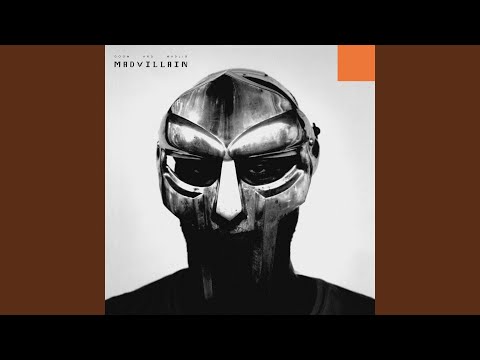
When experimental hip-hop fans recognized “All Caps” in the Claude commercial, it came as a shock. The Madvillain sound is light-years away from the typical catchy tunes usually heard in the advertising world. Madlib and MF DOOM—the two minds behind the Madvillain project—have always represented the most experimental side of the rap world, and the idea of them suddenly becoming known to a general audience was an impossibility that few ever truly imagined.
Let’s take a step back. Madvillain was the “cursed” brainchild born in the early 2000s from the union of Madlib, a producer already recognized as one of the most brilliant minds on the scene, and MF DOOM, a rapper who emerged from the shadows thanks to his 1999 album Operation: Doomsday. For the discerning hip-hop community, that collaboration was comparable to when John Lennon, Eric Clapton, and Keith Richards came up with The Dirty Mac in 1968.
Madlib has long been considered a genius of hip-hop sampling. His unique way of cutting and reassembling beats, drawing heavily from his vast musical knowledge, allowed him to breathe life into something emotionally entirely new. This is the beauty of experimental beat production—the most intellectual frontier of the hip-hop world—an approach where Madlib and J Dilla (the other historical genius of the genre) are seen as the founding fathers of a style that, years later, gained brief but significant prominence under the name “wonky” (a genre we also covered in our brief history of electronic music).
Madlib: The Underground Cat and the Fame that Never Came
Now, stop for a moment and listen to All Caps again. Can you feel that sophisticated atmosphere? Those structures designed to provide high-quality food for the mind? In the vast spectrum of musical creativity, this kind of music sits at the absolute antipode of the production processes that birth mainstream hits. It is pure underground spirit, crafted for connoisseurs—appreciated only by those who dig for hidden gems rather than letting themselves be swept away by the standard offerings of the industry.
Madlib has always lived in a world of his own. There are very few interviews available online, but if you look at his rare 2014 encounter with Dazed Digital or his 2019 conversation with Complex, you can catch a very specific side of his character: a self-awareness akin to a scientist in a secret beat laboratory (he famously describes himself as a “hermit”). He is fully conscious of the reverence the community has for him, yet there is a secret, barely whispered frustration whenever the conversation turns to recognition—not necessarily financial—from the music industry.
This emerges, for instance, when he is asked about the production sessions with Kanye West prior to his magnum opus, My Beautiful Dark Twisted Fantasy. It was one of many occasions where his music could have finally shattered the mainstream wall—a trajectory that always seemed to remain unfulfilled for one reason or another. In that specific case, Kanye simply didn’t feel those beats would fit the album he had in mind.
This is how the figure of the “hermit” Madlib has solidified over the years: an artist sitting on the peak of an isolated mountain where only a few elite talents live, looked up to by the rest of the community, with minimal contact with the industry’s inner gears. Madlib is truly a “cult, underground cat,” as Dazed Digital described him. And in the end, the “big cheques” he mentioned in that interview simply never arrived.
At least, not until 2025.
The 2025 Tragedy and the Anthropic Deal
In January 2025, news broke of the catastrophic destruction of Madlib’s California home during the massive wildfires of that period. As reported by Resident Advisor, the blaze consumed a musical collection the producer had meticulously curated for decades, along with the hardware he used to craft his sounds. Madlib has always been an obsessive collector: it is easy to imagine the profound emotional weight of the material lost in that fire.
In the wake of the tragedy, Madlib launched a fundraising campaign to allow his supporters to help him rebuild his life—an effort supported and shared by his closest collaborators, including Flying Lotus (a cornerstone of the “wonky” scene Madlib pioneered) and Freddie Gibbs (with whom Madlib released the 2019 album Bandana).
It was against this backdrop of collective concern for Madlib’s future that the new Claude AI commercial arrived in late 2025. To everyone’s surprise, the historic “All Caps” beat—of which Madlib holds the licensing rights following MF DOOM’s passing in 2020—took center stage. The hip-hop community let out a collective sigh of relief: Madlib had secured a major licensing deal with a high-profile campaign, a move that would presumably allow him to rise from the ashes of the fire.

Claude: An AI to Reimagine the Future
Suddenly, the Claude commercial takes on an entirely new meaning. In the spot, Anthropic’s AI presents itself as the definitive partner on the frontier of problem-solving. The narrator’s voice almost sings, like a preacher intent on motivating a crowd of followers: we are at the ideal moment to face history’s toughest challenges, now that we have the power of a result-oriented AI like Claude at our disposal.
Yet, in a way hidden from the common eye, Claude is indeed helping to rebuild Madlib’s future. The licensing of “All Caps” for the campaigns airing throughout 2025 and 2026 represents an unexpected reconciliation between Madlib and the big-money industry that, for so long, watched him from a distance without ever finding the courage to extend a hand. This distance never depended on Madlib’s talent, but rather on the marketing power other artists invested in the mainstream—and the fundamentally different, elusive nature of his own character.
It is also interesting to explore the parallel between the original meaning of MF DOOM’s rap in All Caps and its use in an artificial intelligence commercial. DOOM famously sang, “Just remember ALL CAPS when you spell the man name,” a forceful demand for the recognition of his artistic identity—a significant statement for a rapper who chose to remain masked throughout his career. In a similar way, Claude AI, aware of its nature as a faceless entity, adopts All Caps as an invitation for the public to recognize the identity it presents: that of an advanced problem solver.
The music of Madlib in the Claude commercial arrives exactly when it is needed most. It writes a plot twist into a story that likely wouldn’t have happened if things had gone smoothly. Today, curiosity about the “Claude commercial song” is among the most trending searches online: the general public is embracing Madlib through an appearance that no one would have ever imagined. Perhaps it is finally time for his name to become common knowledge.
Frequently Asked Questions (FAQ)
The song is the instrumental version of “All Caps” by Madvillain, the legendary duo consisting of producer Madlib and the late rapper MF DOOM. The track was originally released in 2004 as part of the critically acclaimed album Madvillainy.
The commercial features an uncredited narrator delivering a rhythmic, slam-poetry-style performance. While it follows the cadence of the hip-hop beat, the lyrics are an original script written for the “Keep Thinking” campaign, designed to mirror the complex, iterative nature of human problem-solving.
No. While the ad is built on the foundation of a classic Madvillain beat, the vocals of the late MF DOOM are not included. The campaign focuses on the sophisticated, jazz-influenced production of Madlib to create a cerebral and “underground” atmosphere.
The licensing deal follows a period of significant personal tragedy for the producer. In January 2025, catastrophic wildfires in California destroyed Madlib’s family home, along with his studio and decades of unreleased music. Many in the music community view this high-profile partnership with Anthropic as a vital step in allowing the legendary “hermit” of hip-hop to fund the rebuilding of his archive and legacy.
Originally, the song All Caps represented a demand for respect: the rapper MF DOOM sang “Just remember ALL CAPS when you spell the man name.” Even without the lyrics, the commercial adopts this “All Caps” energy as a metaphor for identity. It serves as an invitation to recognize Claude not as a generic tool, but as a specific entity with a defined role: an advanced problem solver that, like a masked artist, wants to be judged solely on the quality of its output.
