
The first movie The Platform offers an extraordinary overview of society and humanity: let’s have its meaning and symbols carefully explained.
Galder Gaztelu-Urrutia’s film The Platform presents an idea filled with symbolic meaning and dense with themes ranging from individual psychology to existentialism, as the individual confronts the challenges ahead, to the noble cause that drives the Nietzschean superman in his struggle through life. It is a film that impacts the audience with considerable force.
The movie depicts a prison arranged vertically, with each level containing a cell, and at the center of each cell, there is a hole through which a platform passes, delivering food to the prisoners from the top floor down to the bottom. As the platform descends into “the Pit,” as it is referred to by the characters, the amount of food diminishes with each level. This is the first point the director highlights and something that needs to be explained immediately in The Platform: food becomes a semiotic sign of a specific logic that defines the structure of the prison. The lower the platform goes, the less food remains, imposing a difference between prisoners that is, however, mobile. This mobility introduces another fascinating aspect of the prison. Each month, the prisoners change cells.
On the last day of the month, they are put to sleep with gas and wake up at the start of the new month in a different cell, either one with more food or one where the platform brings little to nothing. This is the existential dart for the prisoners, marking the prison as a social experiment. The structure of the prison recalls the archetypal identity of Jeremy Bentham’s Panopticon since prisoners can only see their cellmates or those in adjacent cells but not the overseer, who, in turn, can observe them. A notable example of this dynamic is when Goreng, the protagonist, nearly burns himself and his cellmate Trimagasi alive, as he initially doubts the prison’s food phenomenon and tries to keep a healthy apple from the platform for later, even after it has descended to the next floor.
The idea that food represents the conflict between individuals is clear. It is through food—and the lack of it—that humans lose their reason. The notion of “spontaneous solidarity,” as it is called in the film, where each level consumes the food in proportion to their caloric needs out of concern for others, appears utopian and pretentious. Given the context of our social system, humans are inherently individualistic. Hobbes’ maxim, “homo homini lupus” (man is a wolf to man), captures this alienating individualism, which undermines any intent of solidarity. To some extent, this is where the second movie, The Platform 2, extends this meaning, showing how things can be explained when the Law is introduced in the picture.
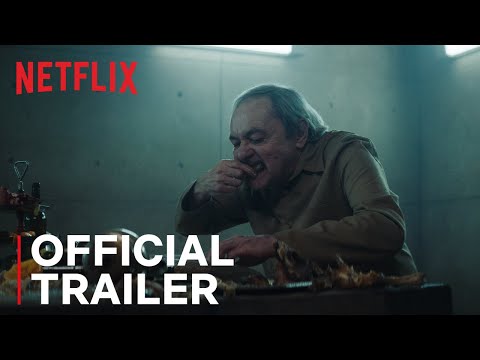
Thus, the idea of solidarity in survival contexts, where survival is the sole glimmer of hope, seems utopian. As the platform descends, food becomes scarce, and at the lower levels, prisoners lose their reason, resorting to cannibalism. This cannibalism signifies not only their low status but also their desperate need to survive, captured in the Latin phrase “Mors tua vita mea” (Your death, my life).
When entering the prison, every inmate, whether voluntarily or due to guilt, chooses one item to bring with them for their stay. Goreng chooses a book, Don Quixote, which seems like a romantic and intellectual choice given the madness around him, but it serves as a mirror for the audience. Toward the end of his six-month sentence, while on the sixth level with access to abundant food, Goreng realizes, with the help of his new cellmate, that the system won’t change by merely adapting to his level. Instead, change requires sacrifice to send a real message to the elusive “administration.”
Thus, Goreng decides to descend into the Pit and distribute the food equally with the help of his cellmate Baharat. This mission is quixotic, as the dynamics of that world make it seem impossible to achieve, and Baharat acts as his Sancho Panza, trying to rationalize Goreng’s (Don Quixote’s) intentions, showing him the difficulty of their goal. Nevertheless, Goreng’s messianic resolve prevails, and with steel bars in hand, riding the platform that delivers food, he and Baharat descend toward the lowest depths.
The film’s most fascinating aspect is not merely the theme of food redistribution as a class struggle, which might seem obvious, but how elements of classic literature—Don Quixote and Dante’s Inferno—are interwoven. The descent into the Pit evokes the true Hell. This literary interpretation opens the door to the film’s ambiguous and unsettling ending, which has left audiences speculating. Perhaps, despite everything, power can be subverted.
At this juncture, where the notion of the Superman willing to sacrifice everything for his cause takes shape, the classic hero’s journey begins. Goreng, aware of the perils of his path, confronts his demons like the archetypal Hero facing the Dragon. He charges forward toward his destiny, undeterred by fear or the temptation to look back.
Ultimately, The Platform highlights the great metaphor of existence through this multifaceted hero, urging humans to embrace the struggles of their own lives: its meaning is completed and explained by the second movie, which shows how things go when the Law is blindly enforced.
